

National Assembly Passes Export Development Fund Amendment Bill 2026 to Improve Pakistan’s Export System
Published On 14 May, 2026
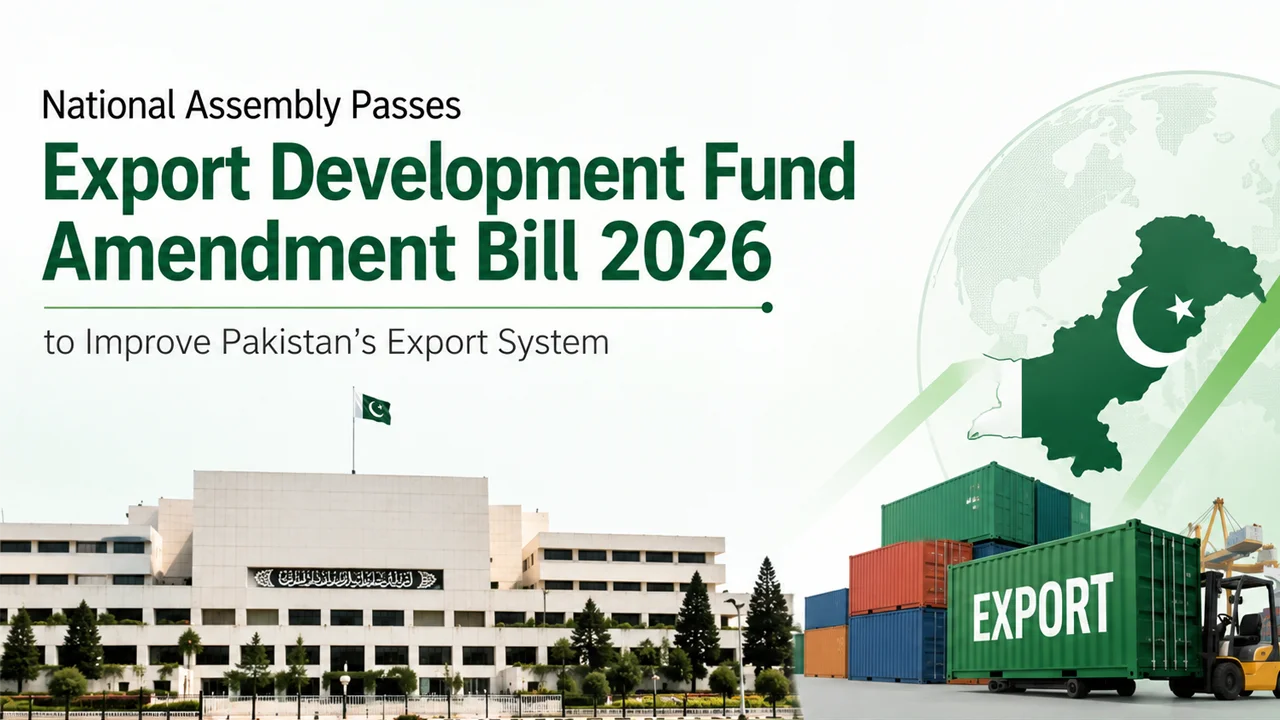
Pakistan’s National Assembly has passed the Export Development Fund (Amendment) Bill 2026 to improve the management and governance of the Export Development Fund (EDF).
The Export Development Fund is used to support Pakistan’s export sector by helping exporters, improving trade infrastructure, and addressing problems faced by businesses involved in exports. The government says these reforms are needed to make the fund more efficient, increase private sector involvement, and improve export growth.
What Changed in the Law?
Private Sector Gets Greater Control in EDF Board
The amendment completely restructures the Board of Administrators managing the Export Development Fund.
The new board will now include:
- Top exporters from Pakistan
- Representatives from Agriculture, IT, and Industry sectors
- Chairperson of Pakistan Business Council
- FPCCI President
- Government representatives from Commerce, Finance, and other ministries
The government says this change was needed because exporters and businesses better understand market challenges and trade needs.
The amendment also ensures that:
- Majority representation remains with the private sector
- The chairman will be selected from private members
This aims to make the fund more business-focused and efficient.
SME Representation Made Mandatory
The law now requires that one representative on the board must come from the Small and Medium Enterprises (SME) sector.
This was introduced because SMEs often face financial and export-related difficulties but previously had limited representation in policy-making.
The government says this will:
- Give small businesses a stronger voice
- Improve support for SME exporters
- Encourage growth of smaller export industries
Chairman Appointment System Changed
Under the new amendment:
- The Federal Government will appoint the Chairman from among private members of the board
Earlier, the board was headed by the Commerce Minister.
The government says this change is intended to:
- Reduce bureaucratic control
- Increase private sector leadership
- Improve professional decision-making in export development
Board Given Powers to Review Projects
The amendment gives the board authority to:
- Review existing EDF projects
- Decide whether projects should continue or be discontinued
- Review performance of completed projects
This was introduced because some projects may no longer be effective or beneficial.
The government says the new review system will:
- Improve accountability
- Reduce unnecessary spending
- Ensure funds are used effectively
Governance & Capacity Building Reforms Introduced
The board will now oversee:
- Capacity building
- Governance reforms
- Institutional improvements related to EDF operations
The government says these reforms are necessary to modernize the export support system and improve long-term planning.
Several Old Sections Removed
The amendment removes multiple sections of the old law, including:
- Section 6
- Sections 9 to 12
- Some clauses in Sections 2, 8, and 15
The government says outdated provisions were removed to simplify the governance structure and reduce administrative complications.
Future Transformation into Corporate Governance Model
According to the Statement of Objects & Reasons, the amendment also prepares EDF for transformation into a Section 42 Company under corporate governance rules.
The government believes this will:
- Improve transparency
- Strengthen governance standards
- Make fund management more professional and modern
Why This Law Was Needed
The government says the Export Development Fund needed reforms because exporters continue to face infrastructure problems, market barriers, and administrative inefficiencies. The previous governance system was heavily controlled by the government, which limited flexibility and private sector participation. By giving exporters and business representatives a larger role, the government hopes to improve decision-making, strengthen export growth, and ensure EDF resources are used more effectively.
The government says the law will help to:
- Improve export sector performance
- Increase private sector participation
- Make EDF management more efficient
- Improve accountability of projects
- Strengthen support for exporters and SMEs
- Modernize export development governance
Pakistan’s National Assembly has passed the Export Development Fund Amendment Bill 2026 to reform how the Export Development Fund is managed. The law gives greater control to private sector exporters, adds SME representation, allows project performance reviews, and introduces governance reforms to improve efficiency and transparency. The government says these changes are aimed at strengthening Pakistan’s export sector, improving support for businesses, and modernizing the country’s export development system.