

New Changes in Public Policy School Law: More Power to PM & Provinces
Published On 24 Apr, 2026
Simple News Explanation:
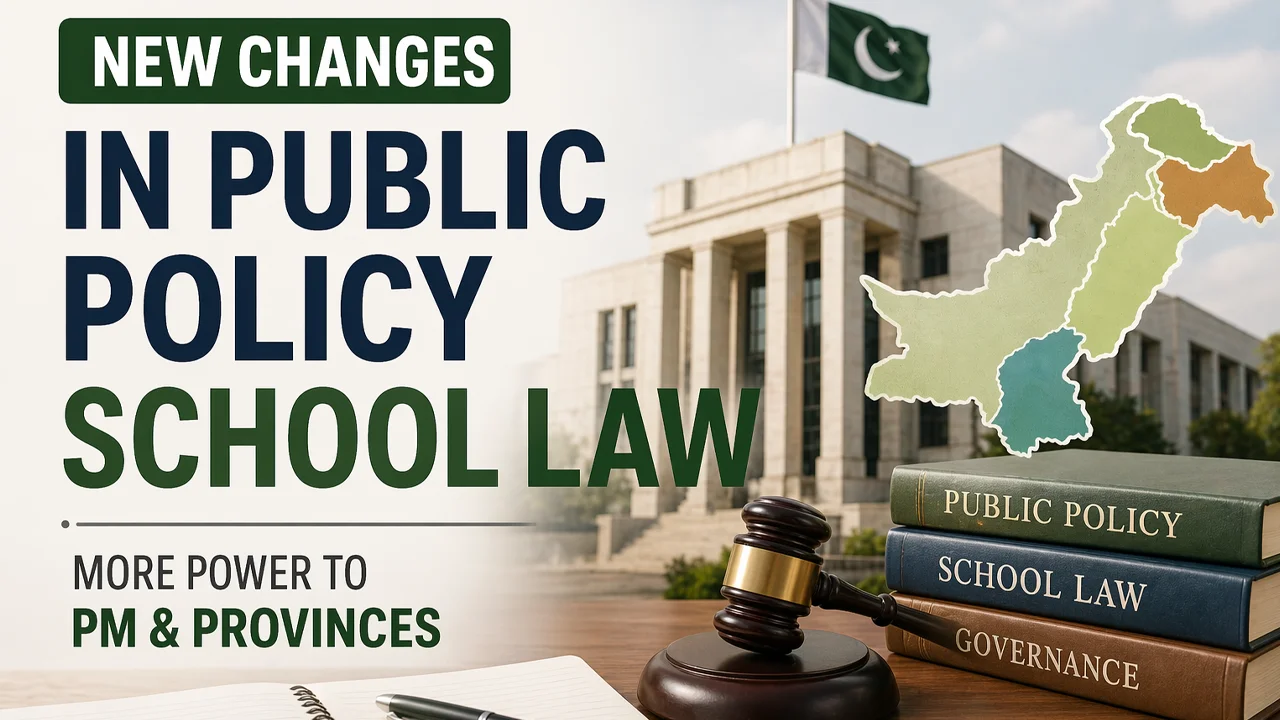
Pakistan’s National Assembly has passed a new amendment in the law related to the National School of Public Policy (NSPP).
This law mainly changes who has authority in appointments and decision-making.
What This New Law Says
1. Power Shift to Prime Minister
- Earlier: Decisions were made by the Federal Government
- Now: Powers are given directly to the Prime Minister
2. Role of Provinces Increased
- Instead of provincial governments:
Now Chief Ministers of each province will have authority in certain matters
3. Changes in Appointments
- Some appointment rules are updated
- Retired officers can only be appointed if they meet proper criteria
4. More Institutional Control
- Some powers shifted from Federal Government to the Board (institution itself)
- This makes the system more organized and structured
Why This Matters:
- Centralizes decision-making at top level
- Gives clearer roles to PM and Chief Ministers
- Improves governance in training of civil servants
Short Summary:
- PM gets more authority in NSPP
- Chief Ministers given defined roles
- Appointment rules updated
- Better institutional control