



Dr. Salimuzzaman Siddiqui
Published On 10 Nov, 2026
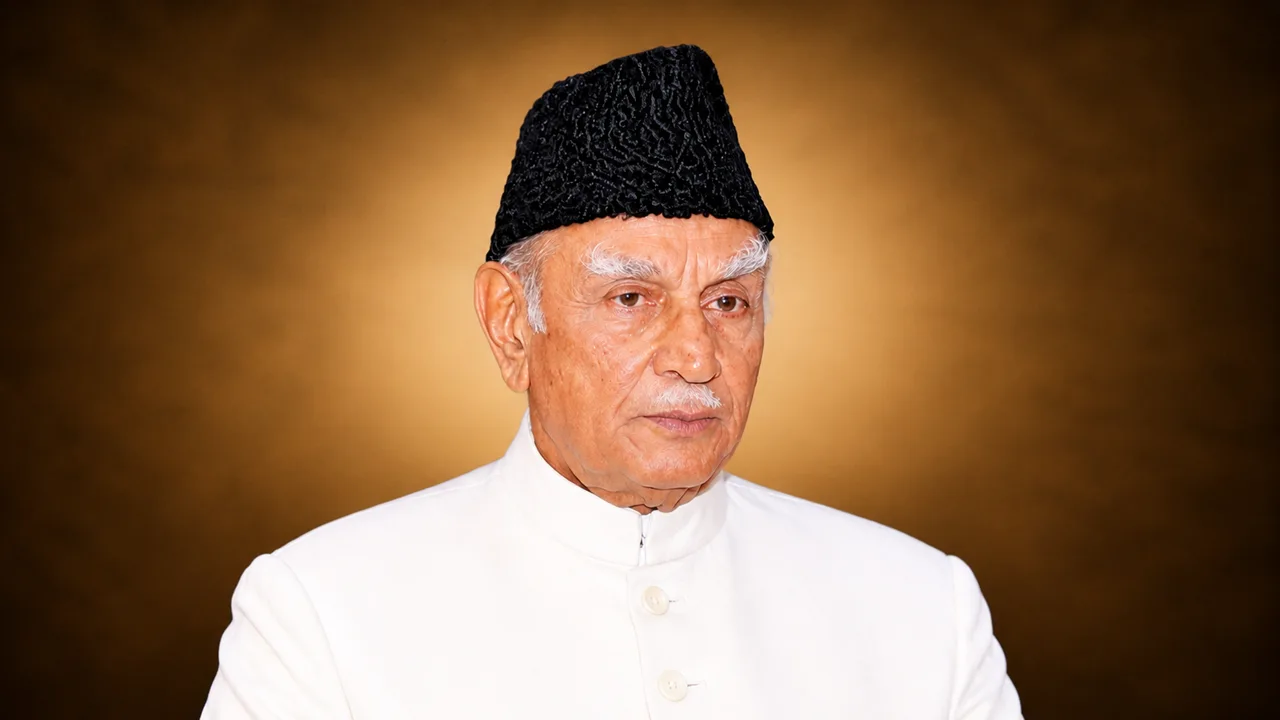
Dr. Salimuzzaman Siddiqui (19 October 1897 – 14 April 1994) was a distinguished Pakistani organic chemist, natural product researcher, philosopher and artist. Born in Subeha, near Lucknow in British India, he became internationally recognized for discovering and isolating medicinally important chemical compounds from plants, particularly Neem and Rauvolfia serpentina. He earned his doctorate in chemistry from the University of Frankfurt, Germany, in 1927. After migrating to Pakistan in 1951, he became a leading figure in the country's scientific development, serving as the first director of the Pakistan Council of Scientific and Industrial Research (PCSIR) and helping establish important research institutions. His scientific contributions earned him international recognition, including election as a Fellow of the Royal Society of London in 1961.
SCIENTIFIC PAKISTANI | THE LEADERSHIP ARCHIVES
The Chemistry of Nature: How Salimuzzaman Siddiqui Discovered the Hidden Power of Medicinal Plants
A Tribute to the Pioneer of Natural Product Chemistry Who Helped Build Pakistan's Scientific Foundations (1897–1994)
The Scientific Breakthrough: Unlocking the Chemistry of Medicinal Plants
Long before modern pharmaceutical research became a global industry, traditional medicine systems across South Asia relied on plants to treat a wide range of illnesses. However, the chemical substances responsible for their medicinal effects were often not fully understood.
Dr. Salimuzzaman Siddiqui helped bridge this gap by applying modern organic chemistry to the study of medicinal plants. His research focused on isolating, identifying and examining naturally occurring compounds that could have important medical and scientific applications.
The Rauvolfia Discovery: One of his major breakthroughs came in 1931, when he isolated an antiarrhythmic compound from the roots of Rauvolfia serpentina. He named it Ajmaline, in honour of his mentor, Hakim Ajmal Khan. The discovery opened new opportunities for studying the plant's chemical properties and its potential applications in treating heart rhythm disorders.
Further Alkaloids: Siddiqui continued investigating Rauvolfia serpentina and isolated several other alkaloids, including ajmalinine, ajmalicine, isoajmaline, serpentine and serpentinine. These discoveries contributed to the scientific understanding of plant-derived compounds and their pharmacological properties.
The Scientific Impact: His work demonstrated how traditional medicinal plants could become valuable subjects for modern chemical research. It also helped establish natural product chemistry as an important area of scientific investigation in South Asia.
The Neem Revolution: Discovering Natural Chemical Compounds
Among Siddiqui's most recognized contributions was his pioneering research on the Neem tree (Azadirachta indica), a plant widely found across South Asia and traditionally valued for its medicinal and agricultural uses.
He investigated the chemical substances present in Neem oil and other parts of the plant, helping bring its natural compounds to the attention of international researchers.
The 1942 Discovery: Siddiqui extracted three bitter compounds from Neem oil and named them Nimbin, Nimbinin and Nimbidin. These discoveries became important contributions to the study of Neem's chemical composition.
Natural Product Research: His investigations helped scientists explore the plant's biologically active substances and their potential antibacterial, antifungal and other applications.
A Lasting Contribution: His work encouraged further research into Neem and other indigenous plants, showing that local biodiversity could provide valuable opportunities for pharmaceutical, agricultural and chemical research.
Building Pakistan's Scientific Foundation: The Establishment of PCSIR
After the creation of Pakistan, the country needed research institutions capable of supporting industrial development, scientific education and technological progress.
In 1951, Prime Minister Liaquat Ali Khan invited Siddiqui to Pakistan to lead the government's scientific research efforts. He was appointed director of the Department of Research, which was reorganized in 1953 as the Pakistan Council of Scientific and Industrial Research (PCSIR).
Institutional Development: As its founding director, Siddiqui helped establish a national research framework focused on applying science to Pakistan's industrial and economic needs.
Research Infrastructure: PCSIR developed laboratories and research facilities to investigate local materials, industrial processes, chemical products and other areas of scientific importance.
Scientific Leadership: Siddiqui remained associated with PCSIR's leadership until his retirement in 1966. His work helped establish a foundation for organized scientific and industrial research in Pakistan.
Establishing a Centre of Excellence: The H.E.J. Research Institute
Dr. Siddiqui's vision for scientific development also included creating advanced research opportunities for university students and professional chemists.
In 1967, the University of Karachi invited him to establish a postgraduate research institute in chemistry. The institution later received a major donation from the Hussain Ebrahim Jamal Foundation and was renamed the Hussain Ebrahim Jamal Research Institute of Chemistry in 1976.
Research Excellence: Siddiqui helped develop the institute into a centre for advanced research in organic chemistry, natural products and the chemical properties of medicinal plants.
Training Future Scientists: The institute provided opportunities for postgraduate students and researchers to work with advanced laboratory facilities and develop their research capabilities.
International Recognition: The institute later became part of the International Center for Chemical and Biological Sciences (ICCBS), which continues to support scientific research and education at the University of Karachi.
Siddiqui remained associated with the institute's leadership until 1990, helping establish a research tradition that continued beyond his lifetime.
Strengthening Scientific Institutions: Pakistan Academy of Sciences
Beyond his laboratory discoveries, Siddiqui understood that a country needed strong scientific institutions to encourage research, recognize talented scientists and support national development.
In 1953, he became a founding member of the Pakistan Academy of Sciences, an organization established to promote scientific knowledge and provide a platform for the country's leading researchers.
Scientific Cooperation: The academy helped bring together scientists from different disciplines and encouraged collaboration on important research questions.
National Science Development: Siddiqui also contributed to national scientific planning and served in important advisory roles related to science and technology.
International Connections: His election as a Fellow of the Royal Society in 1961 and his association with international scientific organizations reflected the global recognition of his work.
Beyond the Laboratory: A Scientist, Artist and Literary Scholar
Dr. Salimuzzaman Siddiqui was not limited to the world of chemistry. He was also deeply interested in literature, philosophy, painting, poetry and music.
Literary Interests: He studied Persian literature and philosophy at the Muhammadan Anglo-Oriental College in Aligarh, graduating in 1919. His early education helped develop a lifelong interest in language, culture and intellectual history.
Painting and Art: During his years in Germany, he developed his skills as a painter. His artwork was exhibited in cities including Frankfurt, and his interest in visual art continued throughout his life.
Poetry and Translation: Siddiqui also translated poetry and remained interested in Urdu literature. His work reflected a combination of scientific curiosity and artistic expression.
Cultural Contribution: In 1966, he was involved in efforts to establish the Central Institute of Arts and Crafts in Karachi, reflecting his commitment to supporting creative education alongside scientific development.
His life represented an unusual combination of scientific research, literature and the arts, earning him recognition as a versatile intellectual.
Global Recognition: Awards and Scientific Achievements
Dr. Siddiqui's discoveries and contributions to scientific institution-building earned him several national and international honours.
Some of his major recognitions include:
- Member of the Order of the British Empire (MBE, 1946): Recognized for his scientific contributions.
- Tamgha-e-Pakistan (1958): Awarded by the Government of Pakistan.
- Doctor of Medicine, Honoris Causa (1958): An honorary degree awarded by the University of Frankfurt.
- Fellow of the Royal Society (1961): Elected to one of the world's most respected scientific institutions.
- Sitara-e-Imtiaz (1962): Recognized for his services in science and medicine.
- Pontifical Academy of Sciences (1964): Appointed as a member of the Vatican-based scientific academy.
- Pride of Performance (1966): Awarded by the President of Pakistan.
- Hilal-e-Imtiaz (1980): One of Pakistan's major civil honours.
- TWAS Recognition (1985): Honoured by the Third World Academy of Sciences for his contributions to scientific research.
High-Impact Research: Scientific Discoveries and Publications
For students and researchers interested in organic chemistry, pharmacology and natural products, Dr. Siddiqui's research provides an important historical foundation.
His scientific work included:
- Ajmaline: Isolation of an antiarrhythmic alkaloid from Rauvolfia serpentina, named in honour of Hakim Ajmal Khan.
- Ajmalicine and Related Alkaloids: Research into additional chemical compounds obtained from Rauvolfia serpentina.
- Nimbin, Nimbinin and Nimbidin: Isolation of three important bitter compounds from Neem oil in 1942.
- Holarrhena Research: Investigation of alkaloids from Holarrhena antidysenterica, including compounds such as conessine.
- Natural Product Chemistry: Extensive research into the chemical constituents of medicinal plants and their potential biological applications.
Siddiqui published hundreds of scientific research papers and received numerous patents related mainly to natural product chemistry. Institutional accounts differ on the exact totals, but his research record demonstrates the scale of his contribution to the field.
A Message to the Youth: Discovering Science in Nature
Dr. Salimuzzaman Siddiqui's journey demonstrates that some of the most important scientific discoveries can begin with a simple question: what makes nature work?
By studying plants that had been used in traditional medicine for generations, he helped reveal chemical compounds that attracted international scientific attention. His work showed how modern research can build on local knowledge while using careful experimentation to investigate its scientific value.
For students in Faisalabad, Lahore, Karachi, Islamabad and across Pakistan, his career offers an important lesson: scientific opportunities can be found in the world around us. The plants, natural resources and biodiversity of Pakistan can inspire research in chemistry, medicine, biotechnology, agriculture and environmental science.
His life also reminds young researchers that national progress depends on more than individual discoveries. It requires laboratories, universities, research institutions and a culture that values knowledge.
Dr. Salimuzzaman Siddiqui's legacy lives on through the scientific institutions he helped build and the discoveries that advanced natural product chemistry. He showed that the study of nature, guided by scientific discipline and curiosity, can contribute to knowledge that reaches far beyond national borders