



National Assembly Passes Railways Amendment Bill 2026 to Modernize Pakistan Railways
Published On 15 May, 2026
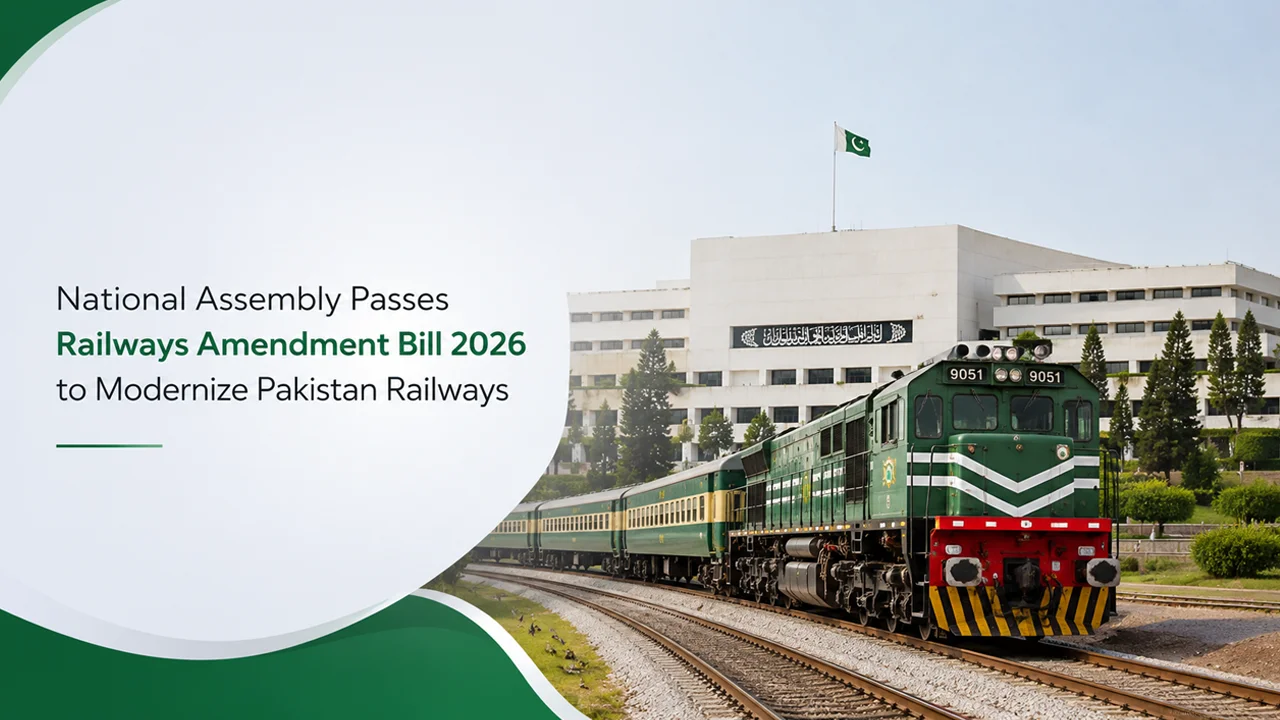
Pakistan’s National Assembly has passed the Transfer of Railways (Amendment) Bill 2026 to modernize Pakistan Railways, improve railway governance, and allow private and foreign investment in railway infrastructure and train operations.
The government says the law is aimed at creating an “enabling environment” for railway development, improving regional connectivity, and supporting economic growth through better railway services.
What Changed in the Law?
Railway Board Structure Completely Changed
The amendment restructures the Pakistan Railway Board. The new board will include:
- Secretary Railways as Chairperson
- Finance and Planning Division representatives
- Senior General Manager of Pakistan Railways
- Provincial representatives
- Three independent members, including at least one female member
The government says this was needed to improve governance and involve professionals in railway decision-making.
The independent members will be appointed by the Prime Minister for a three-year term.
Railway Board Gets More Powers
The law gives the Railway Board authority to:
- Construct new railway lines
- Modify existing tracks
- Close or dismantle railway lines
- Coordinate rail movement with ports
Earlier, many of these powers were directly controlled by the Federal Government.
The government says this was introduced to reduce administrative burden and speed up railway-related decisions.
However, defence-related railway routes cannot be changed without approval from the Ministry of Defence.
Private & Foreign Companies Can Use Railway Tracks
One of the biggest changes is the introduction of Track Access and Rail Development Agreements.
Under this system:
- Private companies
- Foreign investors
- Government organizations
- Provincial bodies
can use Pakistan Railways infrastructure and operate freight or passenger train services through agreements approved by the Railway Board.
The government says this will encourage investment and improve railway services.
Railway Regulatory Authority Powers Limited
The amendment says that agreements approved under this law:
- Cannot be canceled or changed by the Railway Regulatory Authority later
The government says this protection is necessary to give confidence to investors and avoid legal uncertainty.
Competitive Bidding & Investment Rules Introduced
The law allows railway agreements through:
- Competitive bidding
- Government-approved investors
- International agreements
- Foreign investment projects
This was introduced to attract domestic and international investment into Pakistan’s railway sector.
Private Trains Can Run on Pakistan Railways Network
The amendment allows parties to:
- Run freight trains
- Operate passenger services
- Use their own locomotives and rolling stock on Pakistan Railways tracks
The government says this will:
- Increase competition
- Improve efficiency
- Generate revenue
- Improve transport services
Safety & Oversight Mechanisms Added
The law introduces several monitoring and safety measures, including:
- Regular inspections by the Federal Government Inspector of Railways (FGIR)
- Approval of rolling stock by the Railway Board
- Monitoring of network usage and performance reports
The government says these rules are necessary to ensure railway safety while allowing private participation.
Existing Agreements Will Continue
Track Access Agreements signed under older railway rules in 2005 will continue to remain valid, subject to updated conditions and mutual agreement between parties.
This was added to protect continuity of existing railway projects and investments.
Federal Government Can Give Special Exemptions
The amendment allows the Federal Government to exempt certain railway projects or parties from some legal requirements if it considers them important in the national interest.
The government says this flexibility may help speed up strategic railway projects.
Why This Law Was Needed
According to the Statement of Objects & Reasons, the government says Pakistan needs modern railway reforms to improve regional connectivity, encourage rail development, and support economic growth. The previous railway system was heavily centralized and slower in decision-making. By giving more authority to the Railway Board and opening the sector to private and foreign investment, the government hopes to modernize railway infrastructure and improve transport efficiency across the country.
The government says the law will help to:
- Improve railway infrastructure
- Encourage private and foreign investment
- Increase efficiency and competition
- Improve regional connectivity
- Generate more railway revenue
- Modernize Pakistan Railways system
Pakistan’s National Assembly has passed the Railways Amendment Bill 2026 to modernize Pakistan Railways and allow greater private sector participation. The law restructures the Railway Board, gives it more powers, and introduces a system that allows private and foreign companies to operate train services using Pakistan Railways infrastructure. The government says the reforms are aimed at improving railway efficiency, attracting investment, strengthening regional connectivity, and supporting economic growth.